
Table of Contents
Best Log Splitters for Firewood
The best log splitters for firewood do one simple but important job: turn awkward rounds into stove-ready fuel without beating up your shoulders all weekend. That matters whether you heat your home with wood, maintain a cabin, or keep a modest firewood stack for winter emergencies. A good splitter does not just save effort. It makes the whole wood-processing routine faster and more predictable.
Choosing between log splitters for firewood can get confusing fast. Compact electric models are quiet and convenient, while gas-powered machines deliver more force and can work far from an outlet. Heavy-duty units make sense for large hardwood rounds, but they cost more, take up more space, and require more maintenance. A manual kindling splitter fills yet another role by making small starter pieces without a free-swinging axe.
This guide compares five practical options instead of pretending one machine is perfect for everyone. We will look at power source, splitting force, log size, portability, cycle time, storage, and the kind of woodpile each model suits. The goal is to help you choose the best log splitter for your actual workload—not the biggest number painted on the side.
Electric vs. Gas vs. Manual Log Splitters
An electric log splitter is usually the easiest option for routine home use. Plug it into a suitable circuit, set it on firm ground, and work without gas, exhaust, or engine maintenance. Electric machines are generally quieter and easier to store than gas splitters. Their main limitation is power and range. You need an appropriate outlet and must follow the manufacturer’s extension-cord rules.
A gas log splitter makes more sense when the rounds are larger, the grain is ugly, or the woodpile is nowhere near household power. Gas machines commonly offer more splitting force and suit people processing several cords in a season. The trade-offs are fuel, noise, maintenance, weight, and exhaust. Never run a gas engine in a garage, shed, barn, or other enclosed area.
A manual splitter is not a replacement for a hydraulic machine when you are processing full rounds. It is useful for making kindling from wood that has already been split. A ring-style tool with a fixed blade can be easier to control than swinging a hatchet, especially when producing a basket of small fire-starting pieces.
How Much Tonnage Do You Need?
Tonnage is the headline number on most hydraulic log splitters, but it is not the whole story. A clean, seasoned piece of straight-grained softwood may split easily on a small electric unit. A green, knotty hardwood round of similar diameter can stop the same machine cold.
For occasional fireplace use and smaller rounds, a 5- to 7-ton electric splitter can be a sensible starting point. If you regularly process bigger hardwood, twisted grain, or a larger annual supply, a 20-ton gas machine provides more working margin. A 28-ton model is easier to justify when the rounds are consistently large and difficult or when firewood production is a serious seasonal chore.
Do not buy on tonnage alone. Check the manufacturer’s maximum log length and diameter, then compare those limits with the wood you really bring home. Also consider whether you can comfortably lift those rounds onto a horizontal beam. A huge machine is no bargain if its layout makes every round a wrestling match.
What to Look for in a Firewood Log Splitter
Power Access
An electric machine is convenient near the house or workshop. For remote cutting areas, a gas model avoids dragging a long cable across rough ground. If backup electricity is part of your property plan, our guide to gas-powered generators for emergency power can help you think through broader equipment needs. Always verify that any power source meets the splitter manufacturer’s electrical requirements.
Cycle Time
Cycle time is how long the ram takes to extend and return. A difference of a few seconds may not matter for half a face cord, but it becomes noticeable across a large pile. Auto-return can improve workflow because the ram resets while you move the finished pieces and position the next round.
Portability and Storage
Look at total weight, wheel size, handle placement, overall dimensions, and whether the splitter must be assembled. Small electric units are easier to roll into a garage corner. Gas splitters need more storage room and should be moved only as the manufacturer’s instructions allow. Towable appearance does not automatically mean a machine is approved for highway towing, so check the manual before putting it on a road.
Wood Species and Condition
Fresh hardwood, knots, crotches, and twisted grain demand more force than dry, straight-grained wood. If your supply changes from year to year, leave yourself some capacity instead of sizing a splitter around the easiest logs you have ever handled.
Ergonomics and Controls
A comfortable working height can save your back during a long session. Pay attention to control placement, log cradles, beam height, and how finished pieces fall away. Never defeat a guard or modify a control to speed up production. The safest splitter is the one you operate exactly as designed.
The 5 Best Log Splitters for Firewood
1. Boss Industrial EC5T20 Electric Log Splitter — Best Compact Electric Pick
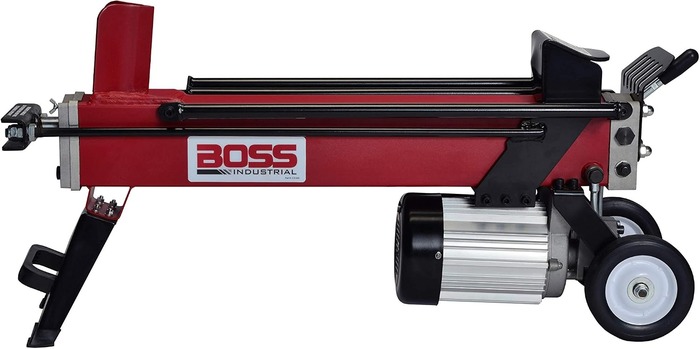
The Boss Industrial EC5T20 is a practical fit for homeowners with a smaller woodpile and access to household power. Its 5-ton hydraulic rating targets modest rounds rather than giant, knotty hardwood. The product listing specifies capacity for logs up to 20.5 inches long and 10 inches in diameter, which covers plenty of fireplace and small-stove work when the grain is cooperative.
This model arrives as a relatively compact electric option, so it avoids gasoline storage and engine upkeep. The listed 14-second cycle time is reasonable for occasional splitting. It is a good match for someone who wants help with the hard part of firewood processing but does not need a full-size gas machine sitting behind the shed.
Key Advantages
- Compact 5-ton electric hydraulic design
- Listed for logs up to 20.5 inches long and 10 inches in diameter
- No gasoline, engine exhaust, or carburetor maintenance
2. BILT HARD 6.5-Ton Electric Log Splitter — Best Value Electric Pick
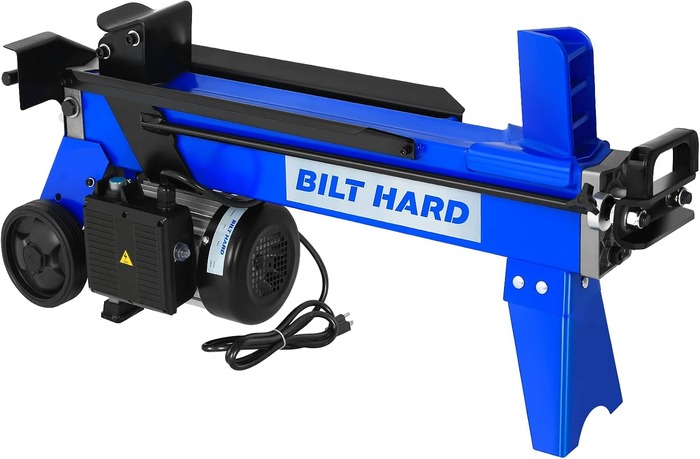
The BILT HARD 6.5-ton model steps up the splitting force while staying in the convenient electric category. Its 15-amp motor and horizontal hydraulic layout make it a strong candidate for regular backyard firewood work. It is still best approached as a residential machine, but the extra force gives it more breathing room than a basic 5-ton unit.
This is the pick for the value-focused wood burner who wants to split typical stove-length pieces near a garage, barn, or outdoor outlet. You still need to respect the machine’s listed log limits and electrical requirements. For straight-grained, reasonably sized rounds, though, a 6.5-ton electric splitter can replace a remarkable amount of maul swinging.
Key Advantages
- 6.5 tons of listed hydraulic splitting force
- 15-amp electric motor with no gas-engine maintenance
- Horizontal design suited to routine home firewood processing
3. SuperHandy 20-Ton Gas Log Splitter — Best for Larger Woodpiles
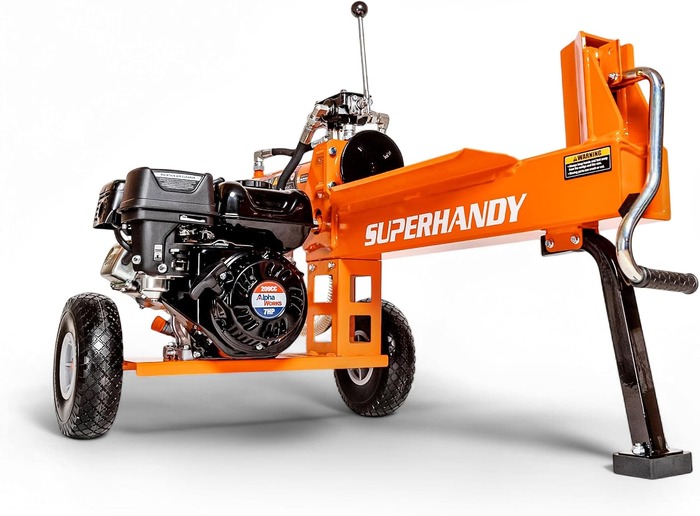
The SuperHandy portable gas splitter is the point where this list moves into serious seasonal processing. Its 20-ton rating, 7 HP engine, full-beam horizontal design, and rapid auto-return ram are built for users who need more capacity than a compact electric machine can offer. It can also work where an electrical outlet is not practical.
This is a better fit for a homestead or rural property with a substantial pile to process. The extra power helps with larger, less cooperative pieces, though no machine is immune to ugly knots and twisted grain. Gas ownership also means oil checks, fuel management, louder operation, and proper outdoor ventilation. Those trade-offs make sense when mobility and higher splitting force matter more than plug-in simplicity.
Key Advantages
- 20-ton rating for more demanding rounds
- 7 HP gas engine for work away from electrical outlets
- Rapid auto-return ram designed to keep the workflow moving
4. Full Boar 28-Ton Log Splitter — Best Heavy-Duty Pick
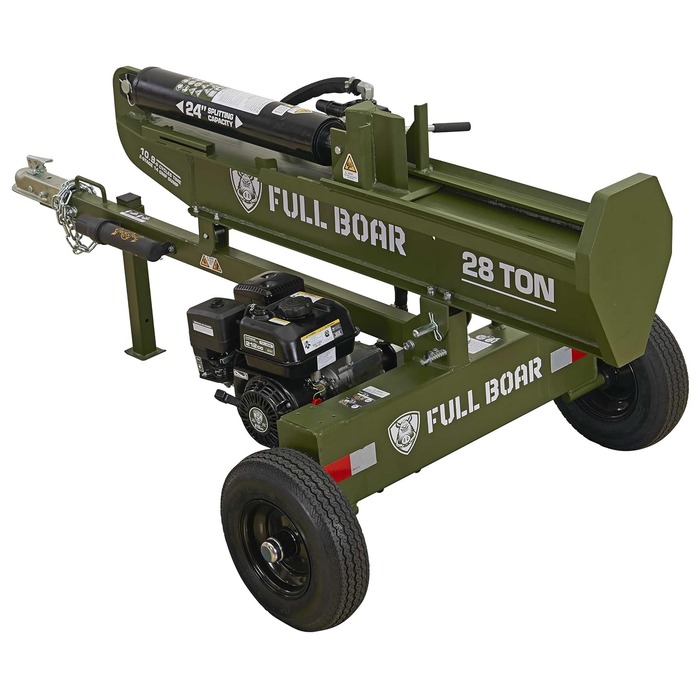
The Full Boar 28-ton splitter is for buyers whose firewood supply includes larger, tougher material. Its 212cc engine and 28-ton rating deliver far more force than residential electric options. That makes it the best fit for regular hardwood processing, knotty rounds, and users who would otherwise spend too much time repositioning stubborn pieces on a smaller splitter.
The trade-off is obvious: a heavy-duty splitter costs more, takes up more space, and requires more maintenance. Before buying, confirm delivery logistics, storage space, moving requirements, and the dimensions of the rounds you expect to handle. If your yearly woodpile genuinely demands this class of machine, the added capacity can turn an exhausting multi-weekend job into a far more manageable routine.
Key Advantages
- 28-ton rating for demanding firewood processing
- 212cc gas engine for independent outdoor operation
- Strong fit for larger hardwood rounds and high-volume seasonal work
5. Kindling Cracker King XL — Best Manual Kindling Splitter
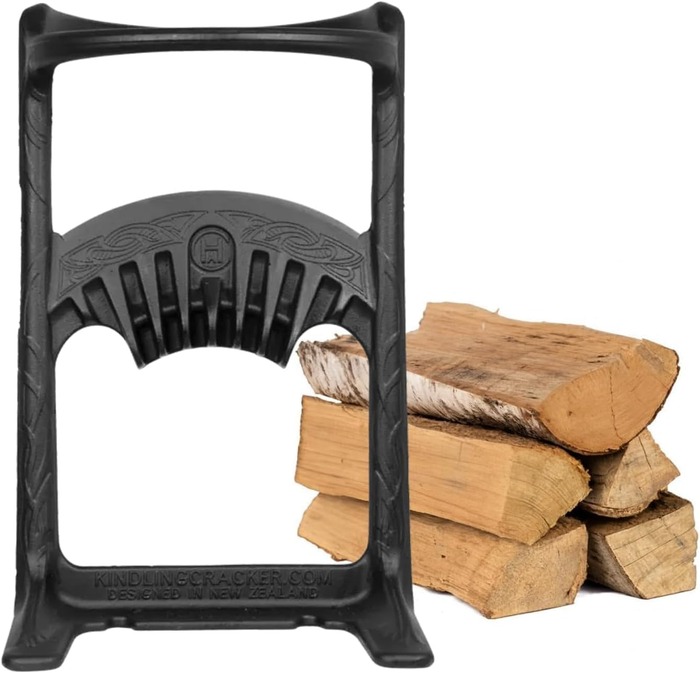
The Kindling Cracker King XL serves a different purpose from the hydraulic machines above. It turns already-split firewood into smaller kindling by holding the blade stationary inside a protective ring. You place a suitable piece over the blade and strike the wood with an appropriate hammer or mallet, following the manufacturer’s directions.
The XL model has a listed 9-inch opening and 17-inch height, giving it more room than compact ring splitters. Its cast-iron construction makes it a straightforward tool for a porch, wood shed, cabin, or fireplace station. It will not process full-size rounds like a hydraulic splitter, but it is arguably more useful for the final step between the wood rack and a quick-starting fire.
Key Advantages
- Fixed blade and protective ring eliminate a free-swinging axe edge
- 9-inch opening accommodates a useful range of kindling pieces
- Simple cast-iron tool with no fuel, cord, or hydraulic system
Conclusion
Log Splitter Safety Tips
Set up on stable, level ground with a clear work area. Keep children, pets, and spectators away from the machine. Wear eye protection and sturdy footwear, and use gloves that provide grip without creating loose material that can catch. Read the manual before the first use, especially the sections covering controls, hydraulic leaks, blocked logs, maintenance, and approved log dimensions.
Keep hands away from the wedge, ram, end plate, and cracks opening in the wood. A shifting split can pinch just as quickly as the machine itself. Do not reach across the beam, hold a log in an unsafe position, or ask another person to steady a round while the ram moves. Shut the machine down before clearing debris or inspecting a problem.
Gas splitters must remain outdoors with generous clearance from doors, windows, and vents. Electric units need suitable outdoor-rated power connections and the correct circuit capacity. Never use a damaged cord, bypass a safety control, or operate a splitter in wet conditions unless the manufacturer expressly permits it.
Which Log Splitter Should You Choose?
For smaller, predictable rounds and occasional home use, the Boss Industrial EC5T20 keeps things compact. The BILT HARD 6.5-ton model is the stronger electric value for people who split more often but still want simple plug-in operation. If your woodpile is larger or located away from power, the SuperHandy 20-ton gas model offers a meaningful jump in capability.
The Full Boar 28-ton machine is the heavy-duty choice for consistently difficult wood and serious seasonal volume. The Kindling Cracker King XL is the companion tool rather than the main splitter: use it to turn split pieces into dependable fire-starting kindling.
The best log splitters for firewood are not necessarily the most powerful. The right choice matches your log diameter, wood species, annual volume, lifting ability, power access, storage space, and maintenance tolerance. Buy for the wood you actually burn, leave a little capacity for the ugly rounds, and let the machine save your energy for the rest of the homestead.
As an Amazon Associate, I earn from qualifying purchases.
Related Self-Sufficiency Guides
- Build a more resilient property power plan with the best gas-powered generators for emergency power.
- Explore quieter charging and backup options in our guide to the best portable solar panels.