
Table of Contents
Choosing the Best Wood Chippers for Homesteads
The best wood chippers for homesteads turn pruning piles, fallen limbs, and woody yard debris into material you can move, compost, or use as surface mulch. That beats hauling bulky branches to the curb or letting them occupy the back corner of the property for the next five years.
The right machine depends on the work. A small electric wood chipper is often enough for routine trimming around a suburban lot or compact homestead. Gas chippers handle thicker branches and can work away from an outlet, but they are louder, heavier, and need engine maintenance. A machine advertised for three-inch branches is a different animal from a 15-amp electric model intended for sticks under two inches.
This guide compares five electric and gas options sold on Amazon. We looked at branch capacity, feeding design, power source, reduction ratio, portability, discharge control, maintenance, and the type of debris each machine is built to process. If you are searching for the best wood chipper for a small farm, garden, or homestead, start with the branches you actually have instead of the largest number on the box.
Electric vs. gas wood chippers
An electric wood chipper is the sensible choice for smaller properties with regular access to an outdoor circuit. Electric models start with a switch, produce no engine exhaust at the machine, and avoid oil changes, gasoline storage, and carburetor trouble. They are generally lighter and easier to fit into a garage or shed.
The trade-off is capacity. The electric models in this guide are listed for branches around 1.7 to 1.75 inches thick. In real use, crooked branches, forks, knots, wet wood, and dense species can make the practical limit smaller. You also need an outdoor-rated extension cord that meets the manufacturer’s gauge and length requirements. A skinny cord stretched halfway across the property is not a clever workaround.
A gas wood chipper makes more sense when you need to process larger branches, work far from power, or clean up a substantial amount of woody debris. The gas models below are listed for branches up to three inches. They also cost more, make more noise, require fuel and routine maintenance, and must be operated outdoors with plenty of clearance from buildings.
For a compact property and routine pruning, buy electric. For thicker limbs, storm cleanup, or work spread across several acres, gas power earns its keep.
Chipper, shredder, or mulcher?
These terms overlap in product listings, but they do not always describe the same job.
A wood chipper uses knives or blades to cut branches into chips. Its branch chute is designed for firm, woody material. A shredder uses flails, hammers, or a separate cutting path for thinner twigs, leaves, and lighter debris. A mulcher reduces leaves or soft yard material into smaller pieces, sometimes through a hopper or optional vacuum attachment.
A combination wood chipper shredder can be useful, but read the feed limits carefully when choosing the best wood chippers for homesteads. A machine may accept a three-inch branch through its side chute while limiting its top shredder hopper to half-inch material. That does not mean you can drop a three-inch forked limb into either opening and hope the machine sorts it out.
Material restrictions matter too. Vines, palm fronds, wet greenery, roots, soil-covered debris, and fibrous plants can wrap around moving parts or clog a machine that handles dry branches without complaint. Follow the manual for your exact model rather than treating “yard waste” as one big category.
What to look for in the Best Wood Chippers for Homesteads
Realistic branch capacity
Manufacturers publish a maximum branch diameter, but diameter is only part of the story. Straight, dry branches feed more easily than forked limbs, green wood, knots, or dense hardwood. If most of your branches are close to the machine’s maximum rating, move up a class instead of running at the limit every weekend.
Measure a few typical branches before shopping. An electric chipper rated around 1.75 inches can handle ordinary pruning debris, but it is not a replacement for a three-inch gas chipper. Anything larger may belong in the firewood pile, under a saw, or with a professional tree service.
Power access
A 15-amp electric chipper needs a suitable circuit and the correct extension cord. Check the manual for wire gauge and maximum cord length. Long, undersized cords can create voltage drop and overheating.
Gas models can travel farther from the house, but mobility is not automatic. Look at machine weight, wheel size, balance, handle placement, and whether a tow bar is included, optional, or unsuitable for road use.
Feed and discharge design
A wide hopper is convenient for leaves and small twigs. A dedicated side chute gives longer branches a straighter path toward the cutting mechanism. Adjustable discharge helps direct chips into a cart, pile, or compost area instead of spraying them across the yard.
Pay attention to how you will clear a clog. A clean-out port or accessible housing can save time, but the engine or motor must be off and fully stopped before you open anything. Never use your hands to push material through an operating machine.
Reduction ratio
A listed 15:1 reduction ratio means the machine is designed to reduce a larger volume of debris into a much smaller pile. Treat it as a comparison point, not a guarantee. Chip size and volume depend on the material, moisture, blade condition, and feeding rate.
Maintenance and replacement parts
Electric chippers still need clean air passages, sharp or replaceable blades, inspected cords, and dry storage. Gas models add oil, fuel, spark plugs, air filters, and seasonal engine care. Before buying, check whether blades, belts, bags, and other wear parts are available for the model.
Noise and storage
Chippers are loud enough to demand hearing protection. Gas models are usually louder and take up more room, while electric machines are easier to roll onto a shelf or into a corner. Measure your storage space before a freight-sized box arrives and starts a domestic negotiation.
Top 5 Wood Chippers for Homesteads
1. Sun Joe CJ603E Electric Wood Chipper — Best Electric Pick for Most Homes
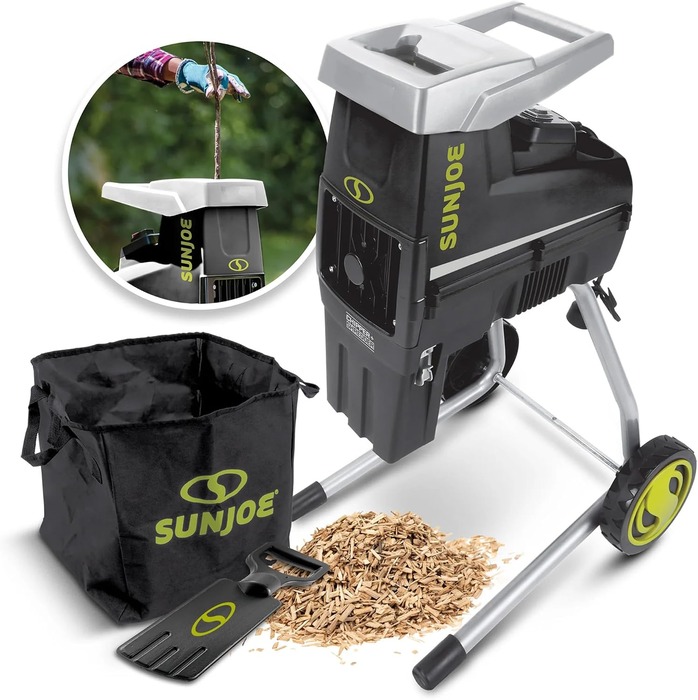
The Sun Joe CJ603E is a practical starting point for homeowners who want to turn routine pruning debris into manageable chips without maintaining a gas engine. Its 15-amp motor and listed 1.7-inch cutting capacity suit smaller branches from shrubs, ornamental trees, and regular property cleanup.
This model includes a collection bag and rolls on wheels, which makes it easier to work near the debris pile and capture the output. It is compact enough for a garage or shed and avoids the fuel, oil, and exhaust concerns that come with gas machines.
The 1.7-inch rating is a ceiling, not an invitation to force every crooked limb into the chute. The Sun Joe makes the most sense when your debris is mostly straight, reasonably dry, and comfortably below the maximum diameter. For thicker branches or high-volume storm cleanup, skip the wishful thinking and buy a gas model.
Key Advantages
- 15-amp electric motor with simple push-button starting
- Listed 1.7-inch maximum cutting diameter
- Collection bag and wheeled frame for routine cleanup
- Strong fit for smaller properties and regular pruning debris
2. WEN 41119 Electric Wood Chipper — Best Budget Electric Option
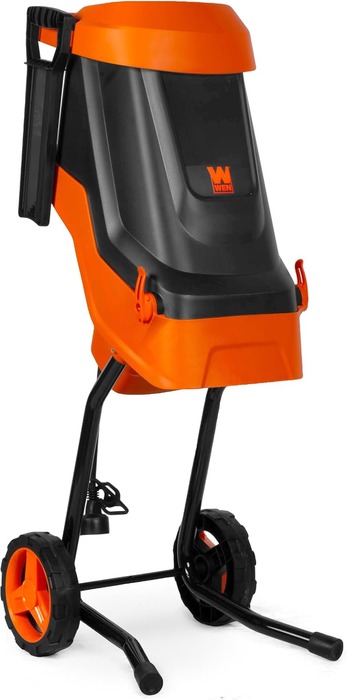
The WEN 41119 covers the same general territory as the Sun Joe but leans toward the value buyer. It has a 15-amp motor, a listed 1.75-inch branch capacity, wheels, a collection bag, and a push stick with onboard storage. WEN also lists a safety mechanism designed to prevent startup while the hopper is open.
This is a good fit for seasonal trimming, small branches, and the homeowner who would rather avoid another gas engine. The listing states up to 8,000 cuts per minute and includes two seven-inch cutting blades. A two-year warranty adds some reassurance for a machine that may spend several months at a time in storage.
Choose the WEN when price and simple electric operation matter more than heavy throughput. It is built for patient feeding and modest debris, not for swallowing tangled brush or a stack of three-inch hardwood limbs.
Key Advantages
- 15-amp electric design for branches listed up to 1.75 inches
- Hopper-open startup prevention mechanism
- Includes collection bag, push stick, wheels, and two cutting blades
- Two-year listed warranty
3. GreatCircleUSA 3-in-1 Gas Chipper Shredder — Best Multipurpose Gas Pick
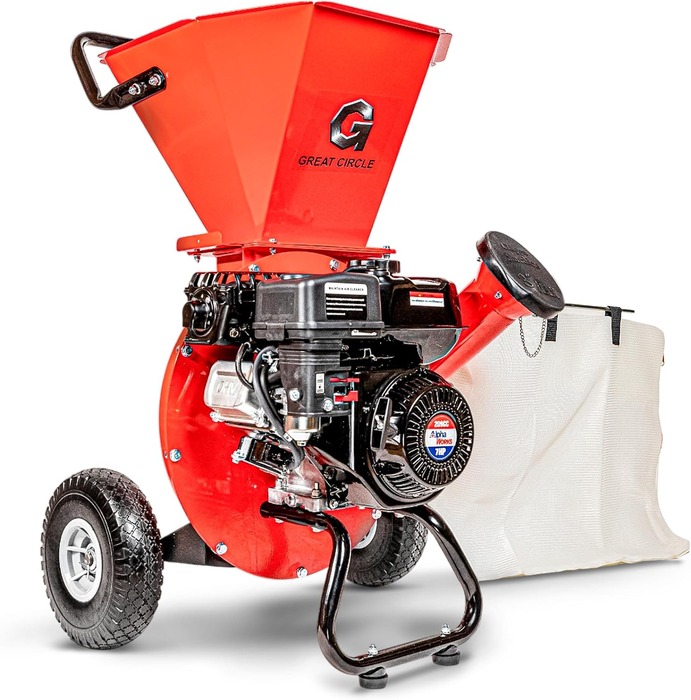
The GreatCircleUSA 3-in-1 is the most versatile gas machine in this group. Its seven-horsepower four-stroke engine powers a side chute listed for branches up to three inches. A separate top hopper handles smaller material up to half an inch, giving brush and light yard debris a different feed path from longer limbs.
The listed 15:1 reduction ratio and optional vacuum and tow-bar accessories make this model attractive for a larger property with mixed cleanup jobs. Those accessories are sold separately, so budget accordingly. The chipper itself is still a substantial gas-powered machine that needs outdoor operation, fuel care, oil checks, and room for safe storage.
GreatCircleUSA lists several materials that should stay out of the machine, including vines, palm fronds, pine cones, fresh greens, and petrified wood. That warning is worth taking seriously. This model is versatile within its design limits, but it is not a mechanical compost bin for anything you can drag across the yard.
Key Advantages
- Seven-horsepower four-stroke gas engine
- Side chute listed for branches up to three inches
- Separate top hopper for material up to half an inch
- Listed 15:1 reduction ratio with optional vacuum and towing accessories
4. SuperHandy Mini 7 HP Gas Wood Chipper — Best Compact Gas Pick
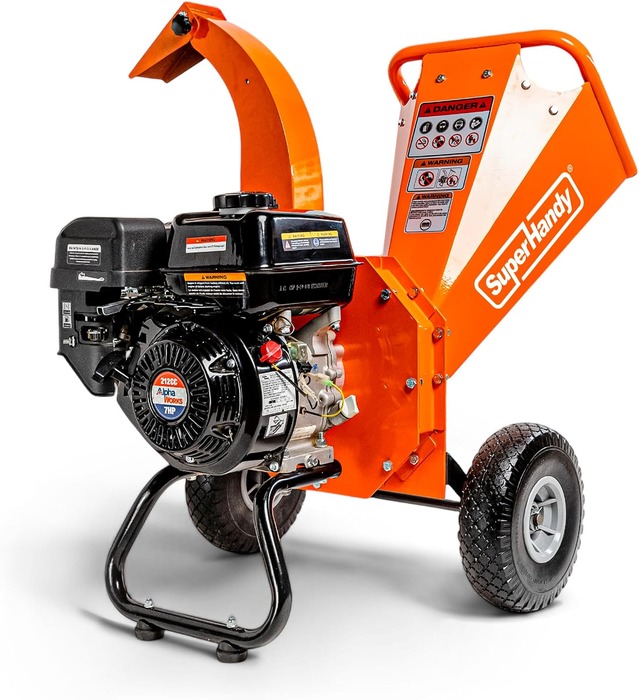
The SuperHandy Mini is for buyers who need gas-powered branch capacity but do not want the largest machine they can squeeze onto the property. Its seven-horsepower four-stroke engine and extended feed chute are listed for branches up to three inches, while the compact steel frame makes storage and movement less awkward than with some larger gas units.
The adjustable discharge guide can direct chips through a range of roughly 90 to 145 degrees. That is useful when filling a cart, building a chip pile, or spreading material in a controlled area. The machine also carries a listed 15:1 reduction ratio.
“Mini” is relative here. This is still a gasoline chipper with spinning blades, exhaust, noise, and enough appetite to require careful feeding. The listing excludes vines, palm fronds, pine cones, fresh greens, and petrified wood. Buy it for woody branches and brush that match the manual, not for every inconvenient plant on the property.
Key Advantages
- Seven-horsepower gas engine with listed three-inch branch capacity
- Compact frame compared with larger gas chippers
- Adjustable discharge guide for better chip placement
- Listed 15:1 reduction ratio
5. Champion 3-Inch Portable Chipper-Shredder — Best Support-Focused Gas Pick
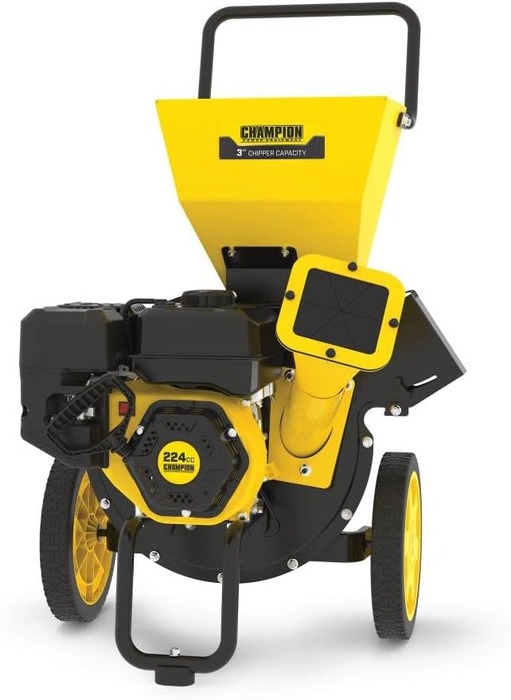
Champion’s portable chipper-shredder uses a 224cc single-cylinder OHV engine and hardened steel blades. Its chipper chute is listed for branches up to three inches, while the shredder chute handles leaves, shrubbery, and yard debris up to half an inch. A two-bushel collection bag helps contain the output.
The rear clean-out port is a useful feature when material jams or debris collects inside the housing. Champion lists a two-year limited warranty and lifetime technical support, which may matter to buyers who would rather call an established support line than diagnose an unfamiliar engine alone.
This is the support-focused choice, not the lightweight one. Confirm delivery access, assembly requirements, storage room, and how you will move it around the property. If you expect to process both branches and lighter debris, the separate feeds make more sense than trying to push everything through one narrow chute.
Key Advantages
- 224cc gas engine and hardened steel blades
- Chipper chute listed for branches up to three inches
- Separate shredder chute for material up to half an inch
- Two-bushel bag, rear clean-out port, and stated support coverage
Using wood chips around the homestead
The best wood chippers for homesteads can turn a brush pile into material that is much easier to handle. Wood chip mulch works well on paths and as a surface layer around many trees, shrubs, and perennial beds. The University of Minnesota Extension recommends wood chips or shredded bark for those uses because they break down slowly.
Keep mulch away from trunks and plant crowns rather than piling it into a volcano. Know what went into the chipper, too. Diseased material, plants treated with persistent herbicides, thorny debris, and species with special handling concerns should not automatically be spread around food crops.
Fresh wood chips are not a universal soil amendment. Using them as a surface layer is different from digging a large amount of woody material into a vegetable bed. If you are improving a raised-bed system, pair sensible mulch use with efficient watering; our guide to the best drip irrigation kits for raised beds covers that side of the job.
Chips can also become a carbon-rich compost ingredient when mixed and managed correctly, but the exact balance depends on the material. A pile of dry branch chips behaves differently from a wet mix full of green leaves. When in doubt, use the chips on paths or age them before experimenting near valuable plants.
Wood chipper safety
Wood chippers deserve more respect than an ordinary garden tool. The cutting mechanism can pull branches inward quickly, and loose clothing, ropes, gloves with cuffs, or a hand placed too close to the feed opening can follow. Read the manual before using the machine and inspect all guards, emergency controls, fasteners, cords, fuel lines, and chutes before each session.
Wear eye protection, hearing protection, close-fitting clothing, sturdy nonslip footwear, and gloves appropriate to the machine. Keep children, pets, and bystanders well outside the work zone. Stand to the side of the infeed area, feed branches butt-end first when the manual directs, and let the machine pull material at its designed rate. Do not lean over the hopper.
Use the supplied push paddle only as instructed. Never reach into a chute, even if the machine appears to have stopped. Shut it down, disconnect the electrical supply or disable the engine according to the manual, and wait for every moving part to stop before clearing a jam or opening a housing.
Gas chippers belong outdoors, away from doors, windows, and vents. Electric models need dry conditions, protected connections, and the correct outdoor-rated cord. The OSHA Chipper Machine Safety guidance is worth reading before your first cleanup day, even if you are using the machine at home rather than on a job site.
Which wood chipper should you choose?
The Sun Joe CJ603E is the best electric wood chipper here for most homeowners. It has enough capacity for routine pruning, a long review history, and a compact design that does not create another engine-maintenance chore. The WEN 41119 is the budget alternative for similar small-branch work.
For gas power and mixed debris, the GreatCircleUSA 3-in-1 offers the most flexible feeding setup. The SuperHandy Mini is a better fit when you want three-inch listed capacity and adjustable discharge in a more compact package. Champion’s 3-inch chipper-shredder makes sense for buyers who value a collection bag, separate shredder feed, and stated technical support.
The best wood chippers for homesteads is the smallest machine that can comfortably handle most of your real debris without living at its maximum rating. Buy around typical branch diameter, material type, annual volume, power access, storage, and maintenance tolerance. A properly sized chipper turns a recurring cleanup problem into mulch. An undersized one turns Saturday into a vocabulary lesson.
Related self-sufficiency guides
- Use less water while keeping raised beds productive with the best drip irrigation kits for raised beds.
- Compare portable charging options for cabins and remote property projects in our guide to the best portable solar panels.
- Build a broader outage plan with the best gas-powered generators for home backup.
Amazon Disclosure
As an Amazon Associate I earn from qualifying purchases.