
Table of Contents
Heat and cool a rural building without installing ductwork
Mini split heat pumps can make a cabin, workshop, office, addition, or other homestead building comfortable without sacrificing space to ducts. One outdoor unit connects to an indoor head through a small wall penetration, providing both cooling and electric heat where extending a central HVAC system may be impractical.
The best mini-split heat pumps are not simply the models with the biggest BTU number. The right choice depends on the building’s actual heating and cooling loads, winter design temperature, insulation, air leakage, electrical service, line-set route, condensate disposal, and whether the system will be installed conventionally or with a purpose-built DIY connection system.
This guide compares five mini split heat pumps sold on Amazon, including a true Quick Connect DIY option, a small cold-climate system, 115V and 230V choices, and a 24,000-BTU model for larger buildings. It also explains details that retailer square-foot charts often skip, so you can compare mini-split heat pumps as complete installed systems. Heating equipment is a poor place for cheerful guesswork.
Size the system for the building, not the product-page estimate
A 12,000-BTU label does not mean the unit belongs in every 500- or 750-square-foot room. Two buildings with the same floor area can have very different loads because of insulation, air leakage, ceiling height, window area, orientation, occupancy, equipment, and local outdoor temperatures.
ENERGY STAR recommends that a contractor verify system size with a Manual J load calculation.[1] ACCA describes Manual J as the national ANSI-recognized method for producing residential HVAC sizing loads.[4] For cabins and workshops, the calculation should reflect how the building will actually be used, including long unoccupied periods, large doors, slab exposure, high ceilings, machinery, and the temperature expected after a cold start.
Oversized mini-split heat pumps can cycle more than necessary, create uneven temperatures, and remove less moisture during cooling. Undersized systems may run continuously and still fail to meet the load during extreme weather. A large machine is not automatically safer. It may simply be wrong at greater expense.
Properly sized mini-split heat pumps can modulate through ordinary conditions without being chosen solely for the most dramatic number on the carton. Comparing mini split heat pumps starts with the building load, not a retailer’s square-foot shortcut.
After the load calculation, the installer should match equipment using manufacturer performance data, not nominal capacity alone. Check the exact indoor-and-outdoor-unit combination in the AHRI Directory, then review low-temperature output when winter heating matters. Model numbers are less exciting than slogans, but considerably better at keeping pipes unfrozen.
Cold-climate performance needs more than a low-temperature claim
A listing that says a heat pump “operates to -22°F” tells you the controls permit operation near that temperature. It does not prove the system still produces enough heat for the building or does so efficiently.
ENERGY STAR’s cold-climate criteria require a coefficient of performance of at least 1.75 at 5°F and at least 70% of nominal 47°F heating capacity at 5°F.[2] Those figures are more useful than an operating-limit badge because they address efficiency and retained output under defined conditions.
When the local winter design temperature falls below 5°F, look for capacity and power data at the colder condition. Compare maximum output at design temperature with the Manual J heating load. If the system cannot carry the full load, plan supplemental heat. Remote cabins, animal buildings, plumbing, and temperature-sensitive supplies need a backup plan before the weather performs its annual audit.
Compare voltage, efficiency, and installation method
115V versus 230V systems
Some small mini-split heat pumps use 115V power, which can be attractive in a cabin or workshop without spare 230V capacity. That does not mean they belong on an ordinary shared receptacle circuit. The exact unit nameplate and installation manual control minimum circuit ampacity, maximum overcurrent protection, conductor requirements, disconnects, and grounding.
Larger and many cold-climate systems use 208–230V power. Have an electrician check panel capacity, circuit routing, disconnect placement, and adopted code requirements before buying. Never select a breaker or wire size from BTU capacity or another model’s installation video.
Electrical service can narrow the field of mini split heat pumps before brand comparisons begin. Record the voltage and nameplate requirements of candidate mini-split heat pumps, then have the proposed circuit evaluated as part of the complete installation.
The same caution applies to generators and inverters. Use the unit’s actual electrical specifications, not cooling BTUs, to plan backup power. Controls, compressor ramping, defrost cycles, low-temperature demand, and other loads all affect the design.
SEER2 and HSPF2
SEER2 describes seasonal cooling efficiency, while HSPF2 describes seasonal heating efficiency. AHRI notes that the industry moved to the revised SEER2 and HSPF2 metrics in 2023 because the test procedure changed.[6] Old SEER and new SEER2 values should not be treated as interchangeable just because the digits look similar.
Higher efficiency can reduce electricity use, but efficiency labels do not replace capacity checks. Compare certified matched systems, regional cold-climate data, warranty terms, and installer support. Mini-split heat pumps serving a primary residence in a severe climate have a different job from a unit that takes the chill off a shoulder-season workshop.
Factory-charged does not always mean DIY
Most conventional mini split heat pumps arrive with refrigerant in the outdoor unit. The installer still connects field-installed copper lines, creates proper flares or approved joints, pressure-tests where required, evacuates the piping, opens service valves, checks for leaks, and commissions the system according to the exact manual.
A factory-charged condenser is not the same as a sealed, precharged Quick Connect line set. The MRCOOL DIY system in this guide is specifically designed around proprietary precharged connections. The Senville, Pioneer, and Cooper & Hunter models use conventional installation methods and should not be described as no-vacuum DIY systems.
This distinction matters when estimating the installed cost of mini split heat pumps. Two mini-split heat pumps with similar capacities may require very different tools, labor, commissioning steps, and warranty documentation.
EPA states that adding or removing refrigerant, or connecting or disconnecting hoses or precharged lines during an R-410A mini-split installation, requires Section 608 technician certification.[12] Product marketing does not erase federal refrigerant requirements, state licensing rules, electrical codes, permits, or warranty conditions.
Plan the complete installation before buying
Mini-split heat pumps need more than an empty patch of wall. Confirm indoor-head clearances, outdoor-unit clearances, the line-set path, maximum and minimum piping lengths, elevation limits, condensate drainage, electrical access, wall construction, service access, and a stable outdoor support.
Cooling condensate must drain to an approved location. The PNNL code-compliance brief cites a minimum horizontal slope of 1/8 inch per 12 inches and says the discharge must not create a nuisance.[13] Follow the current local code and manufacturer instructions. In a finished wall, a poorly routed drain can convert an efficient HVAC purchase into a slow indoor irrigation project.
The outdoor unit also produces water during heating defrost cycles. Raise and locate it as required so meltwater can drain without refreezing against the coil, foundation, walkway, or mounting hardware. On rural properties, consider snow, roof runoff, drifting leaves, livestock, and mowing debris.
Ask the local building, mechanical, and electrical offices which permits and inspections apply. Read the warranty before installation, not after a claim. Some manufacturers require licensed installation, prompt registration, approved components, and commissioning records. Keep receipts, model and serial numbers, photographs, permits, and service documentation.
Installation quality often matters more than small specification differences between mini-split heat pumps. Budget for the work needed to mount, drain, power, seal, test, and document mini-split heat pumps correctly.
Top 5 mini split heat pumps
1. MRCOOL DIY 4th Generation 12,000 BTU – best for a true Quick Connect installation
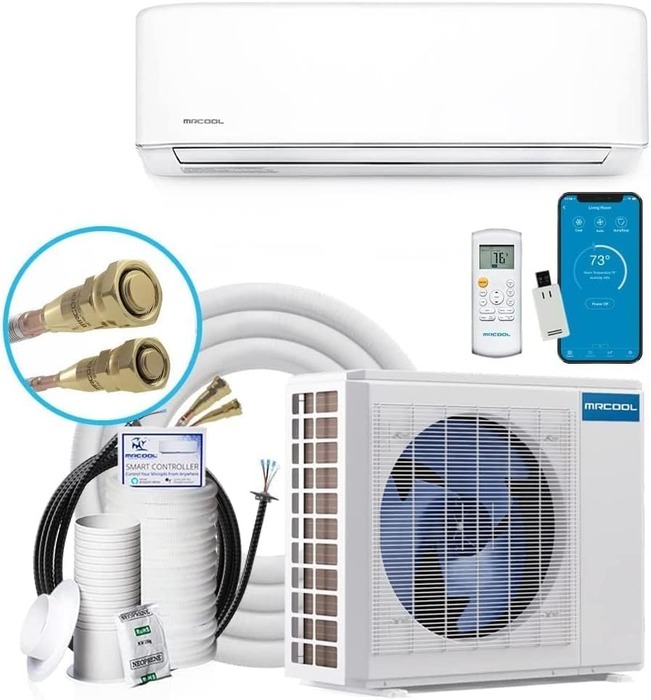
The MRCOOL DIY 4th Generation is the clearest choice among these mini-split heat pumps for an owner who specifically wants a sealed, precharged Quick Connect line set. The verified Amazon listing is the 12,000-BTU, 115V version and includes Wi-Fi controls.[22]
Its installation design avoids the conventional flare-and-evacuate process used by the other four systems. That is a meaningful distinction, not a minor accessory. It can reduce the specialized HVAC work associated with refrigerant connections when the supplied components and instructions are followed exactly.
“DIY” still has limits. The project involves a dedicated electrical circuit, disconnect, wall penetration, indoor-head mounting, outdoor-unit support, line-set handling, condensate drainage, weather sealing, clearances, permits, and safe lifting. A qualified electrician may be required, and local rules can still require professional involvement or inspection.
The listing’s efficiency fields are inconsistent: one area says 22 SEER, while comparison material gives 22.5 SEER2. Those metrics should not be blended. Confirm the exact model’s current certification and submittal data before purchase. The page also does not establish a low-ambient heating limit for this exact selection, so it is not the first recommendation for severe-winter primary heat.
Choose this MRCOOL when the sealed connection system is the deciding factor and a proper load calculation supports the capacity. Buyers who already plan to hire an HVAC contractor should compare professionally installed models on cold-weather performance, warranty support, and total installed cost.
Key Advantages
- Purpose-built precharged Quick Connect line set
- 12,000-BTU, 115V configuration
- Wi-Fi control listed
- Distinct option for buyers avoiding conventional line evacuation
2. Senville AURA 9,000 BTU – best for a small cold-climate space
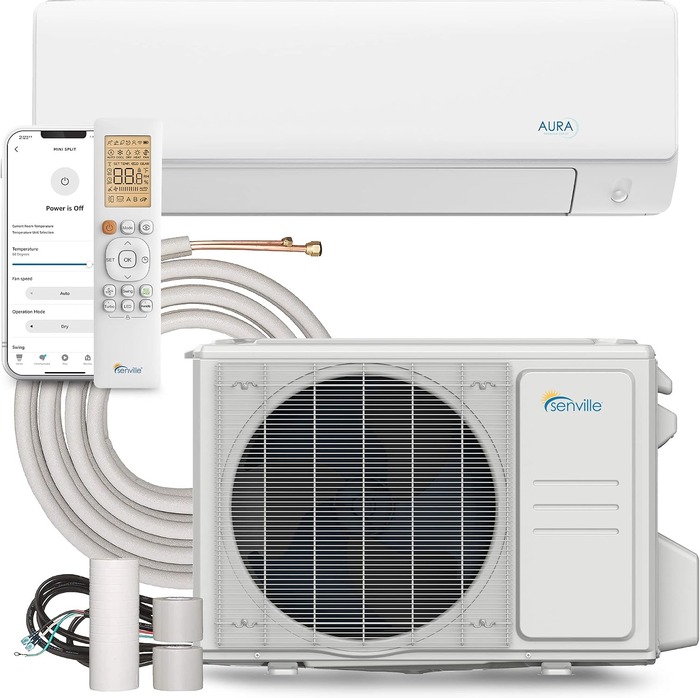
The 9,000-BTU Senville AURA is the cold-climate specialist in this group. The listing identifies a 208–230V system, a 16-foot line set, ENERGY STAR and AHRI certifications, and heating operation down to -22°F.[23]
That low operating limit makes it a more credible candidate for a small cabin, insulated office, or compact workspace in a cold region. It does not establish that the unit will meet the full heating load at -22°F. Ask for capacity and power data at the site’s design temperature, then compare that output with the calculated load.
The listing also contains two efficiency descriptions: 28 SEER in one technical field and 27.4 SEER2 in comparison material. Use the current certified matched-system data rather than converting one number into the other. HSPF2 and point-specific cold-weather COP are more important than a large cooling-efficiency number when winter heating drives the purchase.
This is not a DIY model. Senville expressly calls for professional installation. Budget for a qualified HVAC installer, electrical work, permits, mounting, drainage, commissioning, and any line-set changes. A low equipment price can become irrelevant when the installation plan is treated as an afterthought.
Among these mini-split heat pumps, the AURA is the most appropriate starting point for a small severe-weather building. It still needs backup heat when the load, operating conditions, or consequences of failure demand it.
Key Advantages
- Listed heating operation down to -22°F
- Compact 9,000-BTU capacity
- ENERGY STAR and AHRI claims on the listing
- Strong match for a small, well-insulated cold-climate space
3. Pioneer Diamante Pro 12,000 BTU – best documented 230V all-rounder
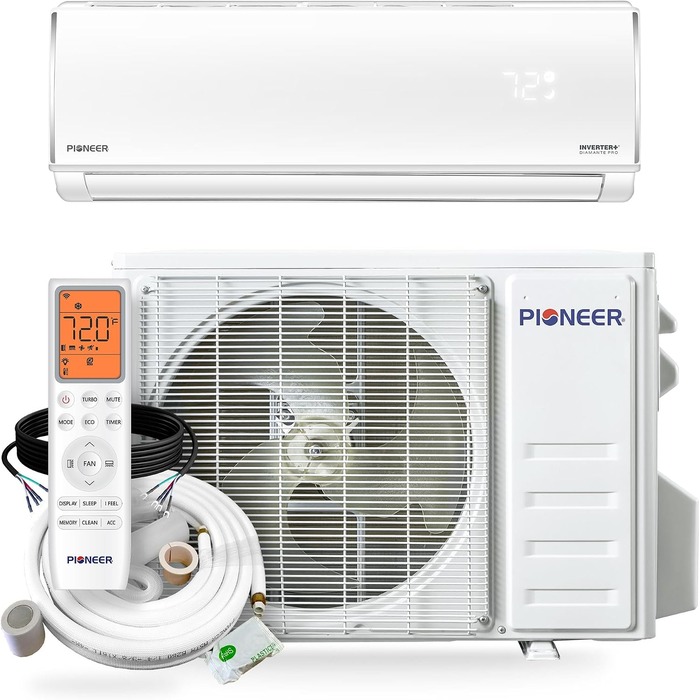
The Pioneer Diamante Pro stands out because the listing provides both modern seasonal efficiency ratings: 20.0 SEER2 and 9.5 HSPF2. It is a 12,000-BTU, 230V system with a 16-foot line set and listed heating operation to -4°F.[24]
Those specifications make it easier to compare with other mini-split heat pumps than a page that supplies only a cooling-efficiency claim. The listing also references AHRI and NEEP recognition. Verify the exact indoor and outdoor model pairing in the official directories because certification applies to matched equipment, not a family name in general.
The 12,000-BTU format may suit a modest workshop, cabin, office, or addition, but the building load determines the right size. A workshop with a tall ceiling, overhead door, thin insulation, and frequent air exchange can require far more capacity than a bedroom-sized space with the same floor area.
The outdoor unit is factory charged, but the system is not advertised with sealed precharged Quick Connect fittings. Treat it as a conventional installation and follow the manual’s flare, leak-test, evacuation, electrical, drainage, and commissioning procedures. Hire qualified professionals and keep records.
Choose the Pioneer when you want a balanced 230V candidate with clearly stated SEER2 and HSPF2. The Senville AURA has the more aggressive listed low-temperature range, while the MRCOOL offers the specialized DIY connection system.
Key Advantages
- 20.0 SEER2 and 9.5 HSPF2 listed
- 12,000-BTU, 230V configuration
- Listed heating operation to -4°F
- Useful middle-ground option for a properly sized small building
4. Cooper & Hunter MIA 12,000 BTU 115V – best conventional 115V option
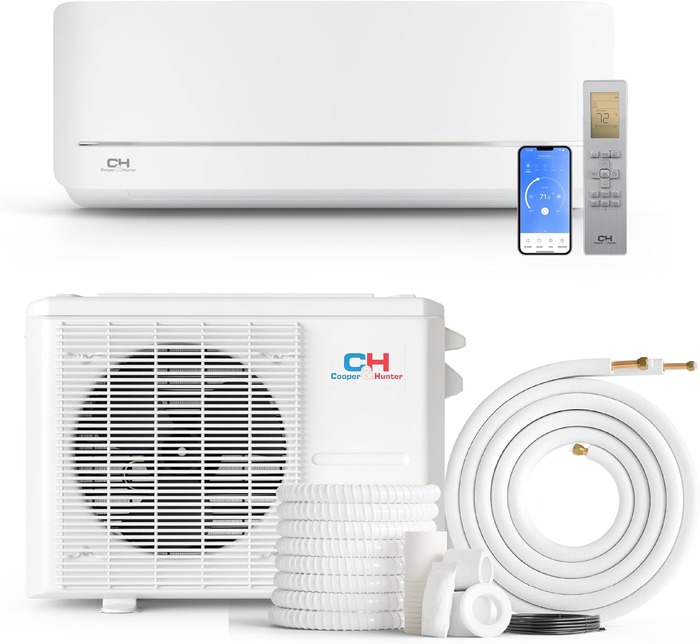
The 12,000-BTU Cooper & Hunter MIA is the conventional 115V choice among these mini-split heat pumps. Its listing gives a 21.2 SEER2 rating and includes a 16-foot pre-flared insulated copper line set.[25]
A 115V configuration can simplify planning where a small building has suitable 115V service but no practical 230V circuit. It does not permit using a random outlet or extension cord. Confirm the exact unit’s minimum circuit ampacity, overcurrent protection, disconnect, conductors, and grounding from the nameplate and manual, then have the installation assessed under local code.
This is not a sealed Quick Connect model. Cooper & Hunter requires professional installation, and the listing says a licensed HVAC installer is required to keep the warranty valid. It also states that registration must occur within 60 days. Buyers should verify the current warranty document and retain invoices and commissioning records.
The product page uses ambiguous wording around 5°F heating operation. Because it says “up to 5°F” rather than clearly stating a lower operating limit, this guide does not repair the sentence on the manufacturer’s behalf. Request the exact submittal data if cold-weather output is important.
Choose this model when a calculated 12,000-BTU load and the available electrical service favor 115V, but you still want conventional professional installation. The MRCOOL is the better fit when the proprietary DIY connection is essential.
Key Advantages
- 12,000-BTU capacity on 115V power
- 21.2 SEER2 listed
- 16-foot pre-flared insulated line set included
- Useful alternative where 230V service is inconvenient
5. Cooper & Hunter MIA 24,000 BTU 230V – best for a larger open workshop
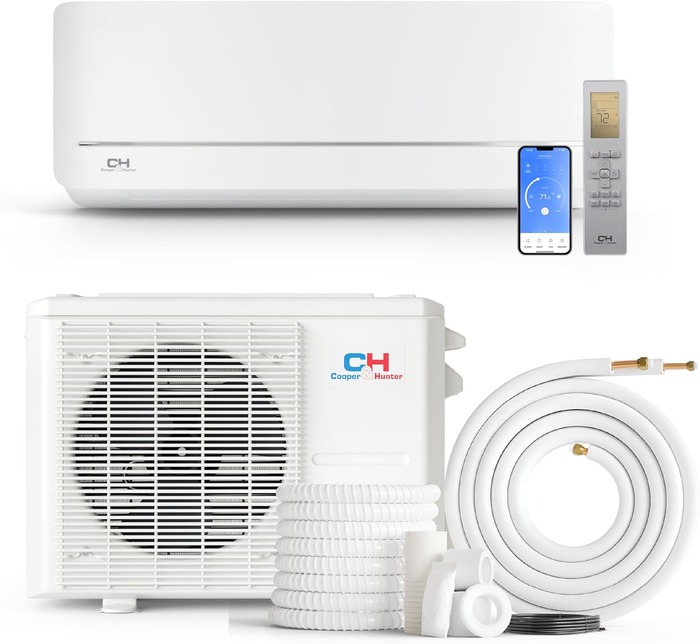
The 24,000-BTU Cooper & Hunter MIA is the high-capacity option in this lineup. The verified listing specifies 230V power, 18.7 SEER2, and a 16-foot insulated copper line set.[26] It is intended for a larger load than the four compact systems above.
This can be a sensible starting point for an open workshop, large garage, retail farm space, or substantial outbuilding. It is not automatically the right system because the room feels large. Tall ceilings, garage doors, infiltration, insulation, windows, heat-producing equipment, occupancy, and local temperatures all belong in the load calculation.
Oversizing a 24,000-BTU unit can reduce comfort and moisture control during mild weather. Undersizing it can leave the building cold when doors open or temperatures fall. Select mini-split heat pumps based on performance at design conditions, not on choosing the largest model that fits the budget.
Like the 12,000-BTU MIA, this unit uses a conventional line-set installation and calls for professional work. The factory refrigerant charge does not turn the included copper into a sealed DIY connection. Confirm warranty-registration requirements for this exact model rather than transferring terms from a neighboring variation.
Choose the 24,000-BTU MIA only when the load calculation supports it, and the electrical service, line-set route, drainage, clearances, and installation budget are ready. Capacity is useful. Unexamined capacity is merely large.
Key Advantages
- 24,000-BTU option for larger calculated loads
- 230V configuration
- 18.7 SEER2 listed
- Includes a 16-foot insulated copper line set
Maintain the system and protect winter reliability
Washable indoor filters need regular inspection and cleaning according to the exact manual. Dirty filters restrict airflow, reduce output, and make the system work harder. ENERGY STAR recommends monthly filter attention for heating and cooling equipment and annual pre-season contractor checkups.[20]
Keep the indoor head unobstructed. Inspect the condensate route, listen for unusual noises, and respond to error codes rather than repeatedly resetting the unit. A clogged drain can damage walls or furnishings, while a dirty indoor coil can reduce airflow and encourage odors.
Maintenance access deserves attention when placing mini split heat pumps near tall ceilings or crowded equipment. Owners are more likely to clean mini-split heat pumps when filters, drains, and outdoor coils are safely accessible.
Outside, maintain the specified clearances and remove leaves, grass, dust, snow, and ice without damaging the coil. Do not build a tight decorative box around the condenser. It needs free airflow and access for service. In snow country, use an approved elevated support and protective placement that still meets manufacturer requirements.
Schedule professional service when mini split heat pumps lose capacity, leak water, ice abnormally, show electrical damage, or develop refrigerant-related symptoms. Refrigerant is not a consumable that should need routine topping off. A low charge signals a leak or commissioning problem that requires proper diagnosis.
Plan off-grid and outage power from electrical data
Mini-split heat pumps can be efficient electrical heating equipment, but they are still electrical loads. A grid-tied solar array normally shuts down during an outage. DOE explains that solar panels alone are not enough for resilience; independent operation requires a properly configured inverter and storage system.[21]
For an off-grid cabin, use the exact model’s voltage, maximum input, operating range, cold-weather demand, and expected runtime. Include battery and inverter losses, defrost operation, fans, controls, well pumps, refrigeration, lights, and other simultaneous loads. SEER2, HSPF2, and BTU capacity are not inverter-sizing figures.
Evaluate off-grid mini-split heat pumps as part of the entire electrical system. Battery and inverter plans for mini-split heat pumps also need margin for winter conditions, aging equipment, and other critical loads.
Portable panels may help recharge a suitable storage system, but they don’t connect directly to standard mini-split heat pumps. Our guide to portable solar panels for off-grid living explains the broader equipment category. An energy audit and winter solar estimate should come before you hit the shopping cart.
Where loss of heat could freeze pipes or endanger animals, add independent backup heat or properly designed generation. Our comparison of gas-powered generators for home backup can help frame that decision, but the generator must support the chosen HVAC system and safe transfer arrangement.
Which mini-split heat pump should you buy?
The Pioneer Diamante Pro is the best all-around choice in this group for a professionally installed, properly sized small cabin or workshop. Its listing provides both SEER2 and HSPF2, a defined 230V configuration, and a stated low-temperature operating range. Those details make comparison less dependent on marketing fog.
The Senville AURA is the better starting point for a small building in a severe-winter region, provided its low-temperature capacity matches the calculated load. The MRCOOL DIY earns its place because its sealed Quick Connect design is genuinely different from conventional factory-charged equipment.
Choose the Cooper & Hunter 115V when the electrical plan favors 115V and professional installation is acceptable. Consider the 24,000-BTU MIA only for a larger calculated load. Mini-split heat pumps reward accurate sizing and careful installation; they are less impressed by floor-area guesses and optimism.
Before purchasing, compare the equipment cost with electrical work, HVAC labor, permits, mounts, line covers, condensate materials, shipping, warranty terms, maintenance, and backup heat. The best system meets the building’s load, can be installed legally, and can still be serviced after the product-page confetti has blown away.
The best mini split heat pumps are therefore not universal winners. They are mini split heat pumps matched to a specific building, climate, electrical supply, installation method, and failure plan. Compare mini-split heat pumps as complete installed systems, and choose them based on verified performance data rather than nominal capacity alone.
Use local weather data when planning heating loads
A nearby airport record may not describe a sheltered valley, exposed ridge, lakeside cabin, or high-elevation homestead. A properly sited weather station can help document site conditions over time. Our guide to the best home weather stations for homesteads covers practical monitoring options.
Site records do not replace official design temperatures or a professional load calculation. They can, however, reveal wind, cold pockets, sun exposure, and outage conditions worth discussing with the system designer. Mini-split heat pumps perform best when the plan reflects the actual building and climate, not an average pulled from a distant ZIP code.
For broader solar research, compare our best portable solar panels. Remember that backup HVAC power requires a complete electrical system, not just a panel with an encouraging wattage label.
Amazon Disclosure
As an Amazon Associate, I earn from qualifying purchases.